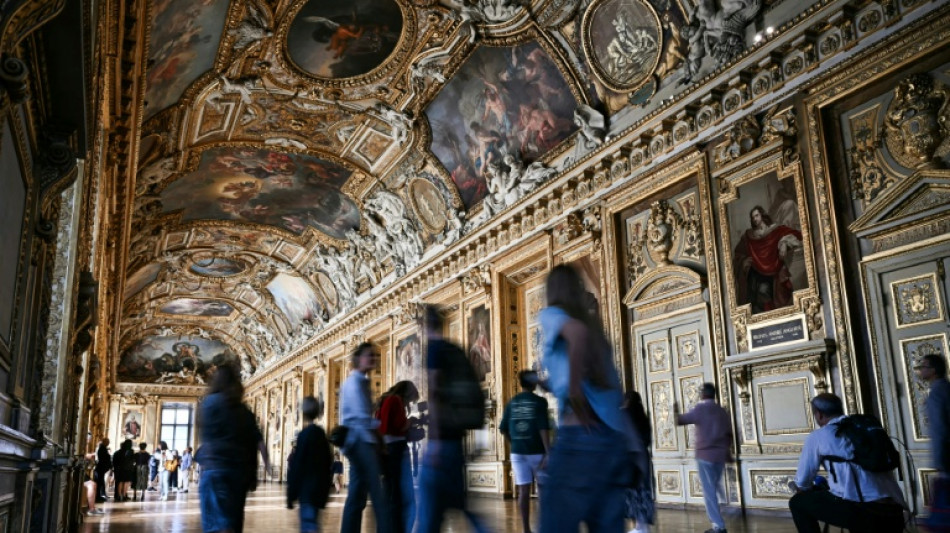
After a year in turmoil, the Louvre faces uncertain future / Photo: © POOL/AFP/File

The Louvre is gradually plugging the security gaps exposed by the spectacular burglary of October 19 last year, but its reputation has taken a battering and its creaking infrastructure is a growing source of concern.
The beloved Parisian museum, the most visited in the world, has spent a year as the subject of police investigations, government reports and parliamentary inquiries following the theft of eight crown jewels in broad daylight a year ago.
The heist exposed a string of failures, from old or non-existent CCTV cameras and a chronic shortage of equipment to the lack of a modern security control room and a security director.
"We still feel the trauma of the burglary," Valerie Baud, a workers' representative from the CFDT trade union, told AFP.
Parliament has heard how, in the run-up to the burglary, the institution had spent just three million euros ($3.4 million) out of 83 million euros earmarked for a security masterplan because of administrative delays, management decisions and red tape.
The museum had "prioritised projects that were visible and attractive", the French Court of Auditors found in one of many damning judgements.
That report and others, compounded by a staff strike and a spate of other incidents -- including a water leak and a major ticket-fraud scandal -- hastened the downfall of Louvre president Laurence des Cars, who resigned in February.
"The Louvre needs a change in security culture, which has yet to happen and will take several years," said Laurent Lafon, who is monitoring the museum as chairman of the Senate's culture committee.
"The Louvre's leaders must embrace the idea that security is a priority, which wasn't the case," he told AFP.
- 'Rapid progress' -
New museum chief Christophe Leribault, who replaced des Cars in February, argues that change is taking place.
"The security masterplan is making rapid progress," he told AFP in a written statement, while stressing the "complexity" of carrying out the work while keeping the museum open to the public.
The museum has pledged to invest around 20 million euros a year until 2032 and, since July, has a new dedicated security director.
Short-term worries about security are also giving way to longer-term questions about how to finance a palace-wide modernisation programme.
Every year, nearly nine million visitors walk the Louvre's galleries, many unaware of the decrepit state of some of the rooms, the ageing plumbing and wiring, as well as poor ventilation in summer and non-existent heating in winter.
Leribault issued his most alarming warning yet earlier this week, telling Le Figaro newspaper "that if the Louvre is not repaired, updated, and transformed, it will very quickly fall behind and will eventually have to close its doors to the public."
- Money worries -
French President Emmanuel Macron unveiled his vision -- called "Louvre — Nouvelle Renaissance" -- in January 2025 which included a new entrance and gallery for the Mona Lisa among other changes.
It came with an eye-watering proposed price tag of a billion euros -- which now looks unrealistic for a country facing a severe budget crunch.
Unions accused him and Louvre management of prioritising grandiose plans for an architectural overhaul instead of more modest changes that would improve the visitor experience.
"We can step up security without going through with this project, which does not address the priorities and states as its goal an unsustainable increase in visitor numbers," said Christian Galani, a representative of the hard-left CGT union.
Leribault remains committed to it, however.
Part of his task as Louvre head is finding new private sources of income from donors who will be invited to sponsor work -- and earn public recognition and perhaps naming rights in return.
Other sources of income could come from further ticket price hikes.
The target is 360 million euros.
"It's a huge challenge, and I don't know whether I'll succeed," he said in June.
Z.al-Jawder--BT