Berlinale filmmakers make creative leaps over location obstacles / Photo: © AFP

As ever the Berlin Film Festival is offering viewers a window into stories from across the world -- but what to do when filmmakers face obstacles in working in the countries that their stories come from?
At this year's edition of the festival several productions have found creative solutions to the problem.
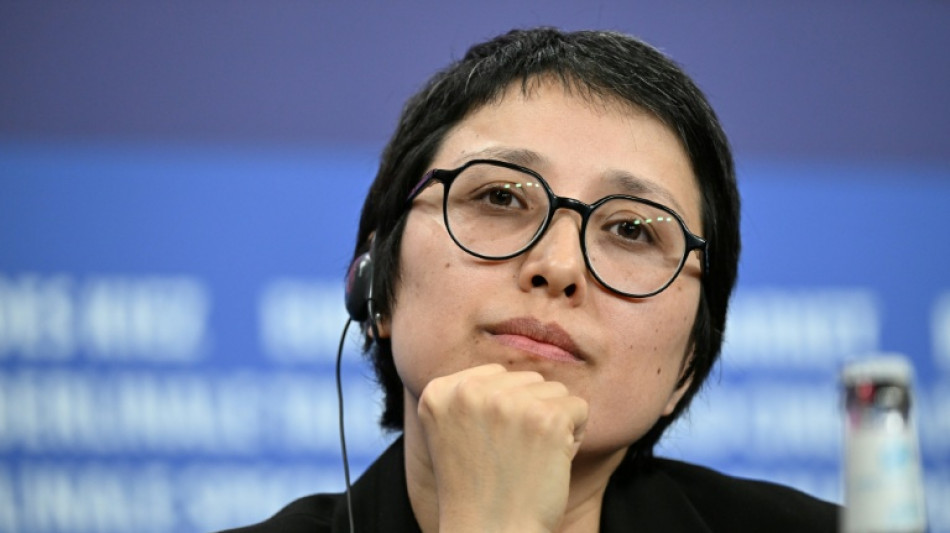
On Thursday the festival opened with a rare offering from Afghan cinema: "No Good Men", the third feature-length film from director Shahrbanoo Sadat.
It tells the story of a young reporter working in Kabul -- played by Sadat herself -- rethinking her scepticism towards men when she strikes up a relationship with a male co-worker.
Sadat, who herself has been living in Germany since Taliban authorities retook power in 2021, said that trawling through locations outside Afghanistan was something she had been used to for a long time.
For No Good Men, she considered Tajikistan, Jordan and Greece to stand in for Afghanistan.
However, Jordan fell through when insurers were spooked by the war in Gaza, with Sadat recalling that "all the work I did went to waste" after location scouting.
The plan to shoot in Greece was scuppered by a lack of funding.
"I know that all the filmmakers, including myself, we are running to Middle East for any stories about Afghanistan," Sadat told AFP.
However, she made her peace with having a setting that wasn't as physically similar to Kabul.
"It's a fiction film. It's not documentary," she said.
Sadat told herself that: "I can definitely create it".
- 'Fierce desire' -
Faced with the alternative of the film not getting made, she embraced the "challenge" of filming in northern Germany, featuring many actors from Germany's large Afghan diaspora.
The film's depiction of the desparate crush at Kabul airport of people escaping approaching Taliban forces made use of a disused German prison.
"It was rainy Berlin and we wanted sunny Kabul," Sadat recalled.
But the weather played ball on the day of shooting: "It was a beautiful sunny day."
Lebanese director Danielle Arbid faced a similar dilemma with her film "Only Rebels Win", which is being shown in the festival's Panorama section, and is set in her hometown of Beirut.
As she was preparing to shoot the film in Beirut in late 2024 with French-Palestinian actress Hiam Abbass, known for work including her role in the hit HBO series Succession, the Israeli army began a campaign of bombardments in Lebanon.
"The producers were asking: 'Could we do it in Marseille or Montreuil?'," Arbid told AFP.
"I said: 'No, we'll have to do it in a studio.'"
The film, which tells the story of an unlikely love story between an older Palestinian Christian woman and a South Sudanese immigrant 40 years her junior, was made in a studio in Saint Denis in the Paris suburbs with "600,000 euros and two walls" said Arbid.
To bring Beirut to Paris, she hired a team in the Lebanese capital to shoot street scenes which were then filled in behind the characters in post-production.
Showing the city at a time when it was being heavily bombarded "for me came from a place of anger, a fierce desire" to show Beirut's resilience.
- Artistic choice -
German director Ilker Catak's film "Yellow Letters", which is in official competition, also indulges in some location-switching, but for a slightly different reason.
His film, about a Turkish director and his actor wife suddenly barred from working because of their political opinions, was shot entirely in Germany.
Berlin takes on the role of Ankara with Hamburg becoming Istanbul.
While producers were confident the film could have been shot in Turkey despite the sensitive subject matter, Germany was chosen to illustrate the fact that threats to artistic freedom are universal.
"We do have to deal with this topic already because there are certain things and certain developments in Germany where we have to be really careful," Catak told a press conference on Friday.
"Democracy and freedom of speech needs to be defended every day," he said.
"They can be taken away again any time here in Germany, but also in the west -- the west is by no means any better than any other place in the world."
I.al-Rashed--BT