Review: 'Elsinore' dramatizes Ian Charleson’s final Hamlet performance amid AIDS diagnosis

The new film Elsinore chronicles the final months of actor Ian Charleson, who returned to the stage as Hamlet at London’s National Theatre in 1989 just weeks after learning he was HIV positive. Directed by Simon Stone and written by Stephen Beresford, the movie focuses on Charleson’s determination to complete his run of performances despite a terminal prognosis.
The 1982 Academy Awards saw a significant upset when Best Picture went to Chariots of Fire, a modestly budgeted sports drama about Cambridge student athletes between the world wars. The film combined the appeal of an inspirational athletic narrative with the prestige of British television drama, becoming a surprise worldwide hit that the British film industry urgently needed at the time. While critics noted it was a good movie, some viewed its victory as scandalously tame compared to other 1981 releases such as Reds, Raiders of the Lost Ark, Atlantic City, and The French Lieutenant’s Woman.
Chariots of Fire boosted the careers of everyone involved, but the Oscar proved to be a fickle indicator of long-term success. Director Hugh Hudson suffered one of the decade’s biggest flops with 1985’s Revolution, a wildly miscast tale of the American founding, and never fully rebounded. Leads Ben Cross and Ian Charleson, both accomplished stage actors, seized the opportunity to move to Hollywood, which did not pan out for either of them.
By the end of the 1980s, Charleson found himself in an awkward position, known almost exclusively for his one big hit without having secured another major role beyond a supporting part in Gandhi. The offers coming his way were not stellar. Consequently, he jumped at the chance in 1989 to return to the National Theatre, where Richard Eyre had previously directed him in a successful production of Guys and Dolls. The project was Hamlet.
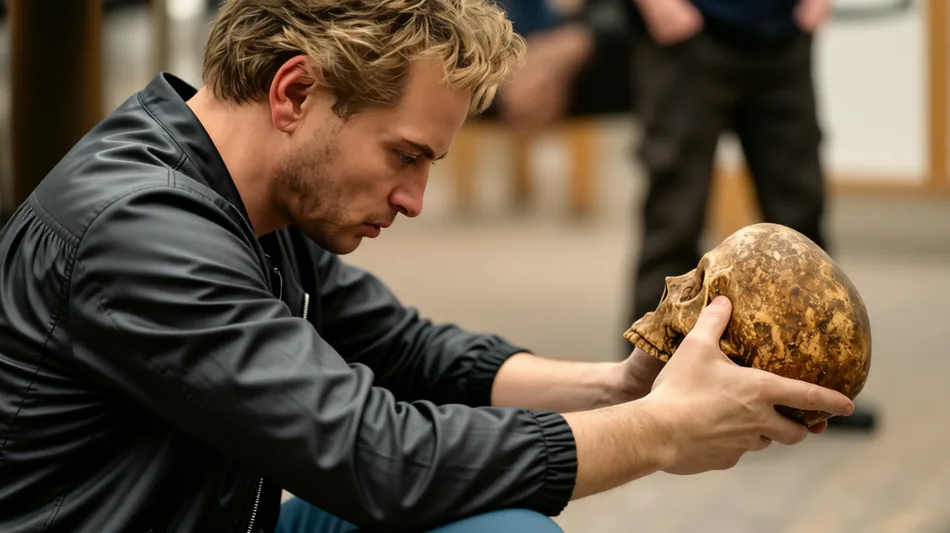
The role became available only because Daniel Day-Lewis had inexplicably walked out in the middle of a performance and never returned. For Charleson, it represented the Everest of acting challenges, one he felt compelled to climb. This determination was intensified by a secret that almost no one knew: he had just been diagnosed with AIDS, a condition at that time viewed as a near-certain death sentence.
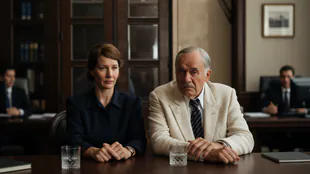
The new film Elsinore, directed by Swiss actor and filmmaker Simon Stone and written by English playwright Stephen Beresford, dramatizes these events. It depicts Charleson, played by Andrew Scott, suffering serious health setbacks while knowing he would soon die. The bargain he drove with himself, Eyre, played by Johnny Flynn, and others was that he be allowed to push himself to exhaustion and beyond in order to end on a peak professional note. He managed it, delivering 24 highly acclaimed performances as the Prince of Denmark, albeit at the cost of likely ensuring his demise just six days into a new decade.
Beresford’s prior screenplays for Pride and Tolkien were not particularly inspired, but he does very solid work here. Stone almost entirely avoids the crescendoes of maudlin sentimentality this material might risk. A couple of stray moments of histrionic pathos from support players Billie Piper, as a good friend and casting director, and Peter Mullan, as Charleson’s father, are easily forgiven in the larger scheme of things.
Scott essays a skilled, genial if driven professional with no time for self-pity. Charleson’s obstinacy is regularly tongue-lashed by Olivia Colman in a very strong turn as the UK’s first dedicated HIV physician. Her character cannot understand a patient prioritizing Shakespeare over his own probable lifespan.
The ambition that pushed him into the Dane’s shoes at this juncture also kept Ian Charleson in the closet, publicly if not within his professional and social worlds. He was aware that coming out would get him typed, and he did not want to be seen strictly as a gay actor. His first film was Derek Jarman’s punk fantasia Jubilee; here, an already ailing Jarman, played by David Dawson, is portrayed as a long-term friend who lambasts Charleson for his lack of political nerve.
Charleson refuses to be coerced, even for this cause. He is fine with being identified as a person living with AIDS after death, but for now, he just wants his Hamlet judged on its own terms, not as the brave last gasp of some poor sick man. He is hardly selfish in behavior towards others similarly afflicted, like ex-boyfriend Georgie, played by Luke Thompson, or the fellow patients in Colman’s hospital ward. It is just that he really needs to prove to himself and the world that he can conquer Hamlet before terminal illness conquers him.
Everything about Elsinore is immaculately orchestrated. Seeing it in late September, it seemed the first mainstream movie this year after The Odyssey to truly merit across-the-board award consideration. It is also probably the best narrative film about AIDS to date, the passage of time having lifted the mantle of heavy-handed case pleading that made such prior efforts as Philadelphia and It’s My Party best described as well-intentioned.
At the same time, it provides a valuable crash course for viewers too young to have experienced that era. It brings back the pervasive urgency around people checking their bodies for lesions, worrying over the slow progress of medical science, and hearing about yet another friend who had suddenly fallen ill. It was a crisis atmosphere that for many, by 1989, was just everyday life. Elsinore is all the more potent for making that the backdrop for a protagonist who cannot escape it, and doesn’t try to, yet still insists on making the last months, weeks or days of his life about something else.
Elsinore opens in Bay Area theaters on Wednesday.
I.al-Buarki--BT