Trump upbeat on Iran deal despite new attacks
US President Donald Trump said Tuesday he was upbeat about the chances of a negotiated deal with Iran, even as Israel and Tehran traded new blows and the United States was reported to be sending more troops to the region.
The latest violence included what Iran said was a second strike during the war on the Bushehr nuclear plant, a civilian site perilously close to Gulf population centres, leading the UN nuclear watchdog to urge "maximum restraint".
Trump, whose pronouncements in recent days have swung wildly from vowing massive attacks on Iran to declaring the nearly month-long war virtually over, said the United States was "in negotiations right now" with Iran -- which has not confirmed any formal talks.
Trump said that Iran's surviving leadership had offered the United States a "prize" -- a cryptic comment that he said gave him faith in diplomacy.
"They did something yesterday that was amazing actually. They gave us a present and the present arrived today. And it was a very big present worth a tremendous amount of money," Trump told reporters in the Oval Office.
"That meant one thing to me -- we're dealing with the right people."
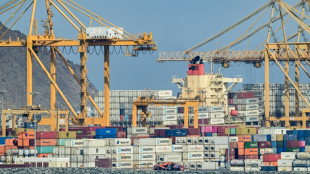
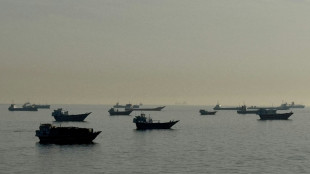
Trump, asked to elaborate, said that the purported gift dealt with oil and gas through the Strait of Hormuz, which Iran has largely blockaded in retaliation for US and Israeli strikes, sending global energy prices soaring.
Trump had earlier threatened to "obliterate" Iran's power plants, which some argue would be a war crime, if it did not open the strait by late Monday Washington time. Before US markets opened Monday, Trump abruptly extended the deadline by five days, citing diplomatic progress.
Pakistan's prime minister has offered to host US-Iran talks, which Trump said involved top officials including Vice President JD Vance.
President Emmanuel Macron of France, which will host G7 talks among foreign ministers on the crisis Friday, called on Iran to "engage in good faith".
- Violence unabated -
Despite Trump's stated hopes for diplomacy, The Wall Street Journal reported that the United States is planning to send 3,000 soldiers from the elite 82nd Airborne Division to the Middle East.
Trump and Israeli Prime Minister Benjamin Netanyahu launched the war on February 28, killing Iran's supreme leader Ayatollah Ali Khamanei, just after new talks between US and Iranian envoys.
Iranian missiles have found growing success penetrating Israeli defences, with AFP images showing rubble-strewn streets in the commercial hub Tel Aviv. On Tuesday, more than a dozen people were injured in Israel including an infant, first responders said.
Israel said it conducted a "large wave" of airstrikes across several areas of Iran. Israeli military spokesman Effie Defrin said his country's war plan was "unchanged" despite Trump's remarks and that it would continue "to deepen the damage and remove existential threats".
Israel's Channel 12 said that Trump's envoys were proposing a one-month ceasefire during which the sides would discuss a 15-point agreement that would include a ban on Iran enriching uranium on its soil and the reopening of the Strait of Hormuz.
Iran in turn would see sanctions relief, according to the report. The Trump administration similarly offered a 15-point plan before a shorter Israeli and US bombing campaign against Iran in June.
Iran had agreed in 2015 to broad restraints on its contested nuclear program in a deal that Trump ripped up during his first term as he joined Israel in applying pressure to the cleric-run state.
The reported agreement would keep in place the Islamic republic which weeks earlier ruthlessly crushed mass protests, killing thousands.
But Trump insisted Tuesday that Iran effectively already had "regime change" after Israeli killings of top leaders.
Iran's powerful parliamentary speaker, Mohammad Bagher Ghalibaf, denied any negotiations with the United States, accusing Trump of seeking "to manipulate the financial and oil markets".
Iran's foreign ministry, however, acknowledged that messages had been relayed by "friendly countries" indicating a "US request for negotiations".
- War is 'daily life now' -
Israel while striking Iran has stepped up its campaign against the Iran-backed Hezbollah militant group in Lebanon, saying its military would take control of south Lebanon up to the Litani river, around 30 kilometres (20 miles) from the border.
Israel -- which occupied southern Lebanon for nearly two decades until 2000 -- carried out new strikes across the country. The Israeli military late Tuesday warned residents of Beirut's southern suburbs, strongholds of Hezbollah, to evacuate in the face of imminent strikes.
The Israeli campaign has killed at least 1,072 people in Lebanon, with more than one million people displaced, according to authorities.
Lebanon's health ministry said at least eight people were killed in the latest Israeli strikes, including a three-year-old girl.
Lebanon was pulled into the Middle East war when Hezbollah began firing rockets into Israel on March 2 to avenge the killing of Khamenei.
Lebanon, whose central government has long been fragile, grew increasingly assertive by announcing it was ordering the Iranian ambassador to leave by Sunday, accusing the Islamic republic of meddling and commanding Hezbollah operations.
Bahrain, Kuwait, the United Arab Emirates and Saudi Arabia all said they had intercepted renewed drone and missile attacks as Iran kept up retaliatory strikes on US-allied Gulf states.
"The sounds, the explosions, the missiles -- they are part of our daily life now," a 35-year-old woman in Tehran told AFP by telephone.
"Our one real worry now is that our oil and gas infrastructure isn't targeted by missile strikes. I think that's the only thing all Iranians can agree on at the moment."
Oil prices, which had tumbled after Trump mooted talks on Monday, rebounded slightly in Tuesday trade, with Brent back above $100 a barrel.
burs-sct/msp
Y.al-Qattan--BT