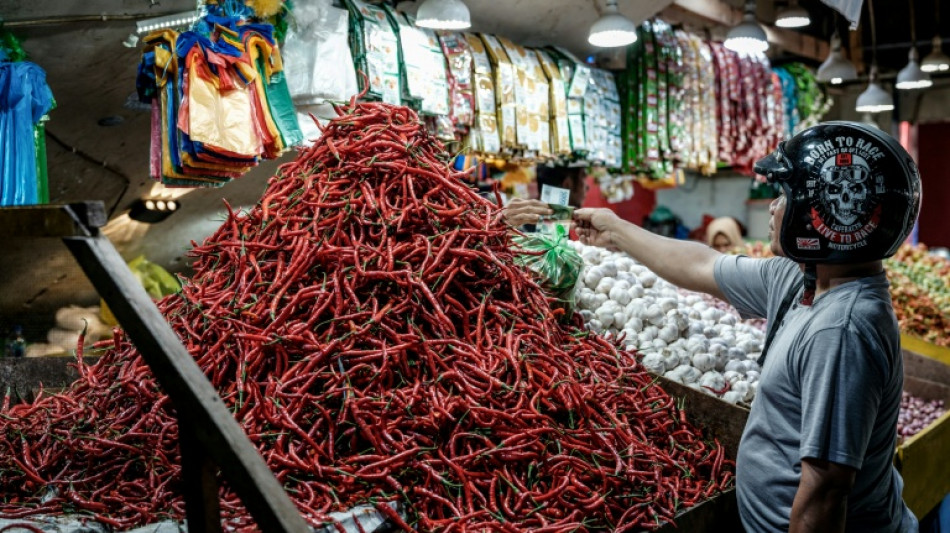
Chilli price drives Indonesia's monthly inflation / Photo: © AFP

Monthly inflation in Indonesia doubled in May, driven by food prices and particularly chilli in the hot sauce-addicted country, the BPS statistics agency said Tuesday.
Month-on-month inflation rose to 0.28 percent, more than double the April number, Statistics Indonesia official Pudji Ismartini told reporters in Jakarta.
Inflation for food, beverages and tobacco was the biggest contributor, she said.
"The dominant commodities driving inflation in this category are red chilli peppers, with an inflation contribution of 0.08 percent; cooking oil and shallots, each contributing 0.04 percent; tomatoes at 0.03 percent; and rice, 0.02 percent," she told a press conference.
Indonesians eat a hot sauce known as sambal made of chilli, garlic, shallots and aromatics with just about every meal.
"These commodities do indeed fall into the category of volatile goods prices," added Pudji.
"It is seasonal in nature because of major religious holidays, among other things, which become one of the triggers for changes in public demand."
Year-to-year inflation stood at 3.08 percent, and 1.35 percent year-to-date, the official said.
The country’s central bank, Bank Indonesia, has set an inflation target of 2.5 percent for this year and next, with a deviation of one percentage point either way.
The Indonesian economy grew 5.61 percent year-on-year in the first quarter of 2026 -- the strongest expansion since the third quarter of 2022, according to the BPS.
However, the country’s currency has plunged to over 17,800 rupiah against the dollar, an all-time low, which the central bank has blamed on global tensions and seasonal factors, including strong dollar demand for corporate dividend payments and hajj pilgrims travelling abroad.
M.al-Kooheji--BT