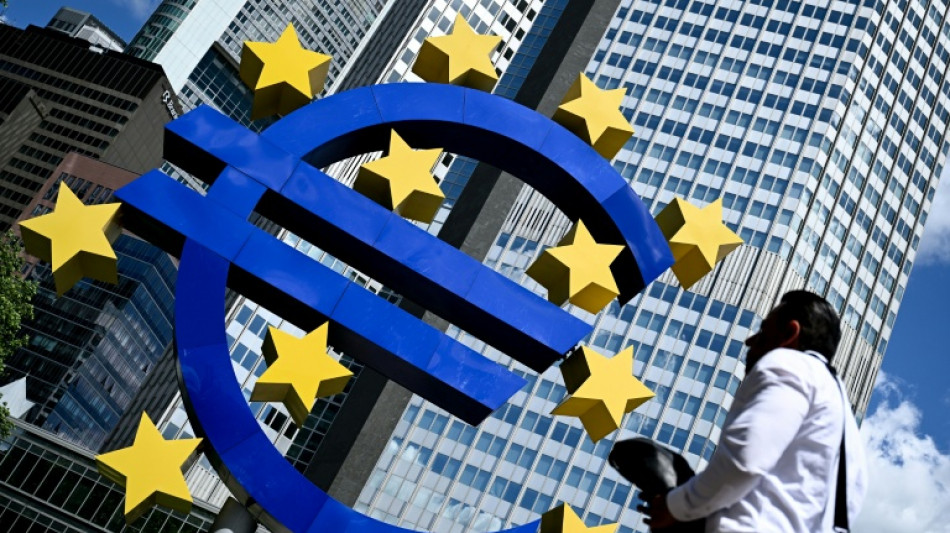
ECB makes first rate hike since 2023 to tame Iran war inflation / Photo: © AFP

The European Central Bank on Thursday raised its benchmark interest rate for the first time since 2023 as the Middle East war stokes inflation, despite concerns the move could hit the struggling eurozone economy.
The ECB lifted its deposit rate a quarter point to 2.25 percent, becoming the first major central bank to tighten monetary policy in response to the energy shock unleashed by the conflict.
Eurozone inflation has been accelerating since the start of the US-Israeli war against Iran, jumping to 3.2 percent in May, above the ECB's two-percent target.
Announcing the rate increase, the ECB said "the war in the Middle East is generating inflation pressures".
"The outlook remains uncertain, with upside risks for inflation and downside risks for economic growth," it said in a statement.
"The full implications of the war for medium-term inflation and growth will depend on the intensity and duration of the energy price shock, as well as the scale of its indirect" effects, it added.
The ECB also raised its inflation forecast for this year to three percent, up from a previous estimate of 2.6 percent in March.
And the central bank cut its eurozone growth projection for this year to 0.8 percent from 0.9 percent.
The Strait of Hormuz, a crucial oil and gas transit route, remains almost totally closed, while a ceasefire in the three-month-old war is under pressure after the United States launched new strikes and Tehran responded with attacks in the region.
- First mover -
While some smaller central banks have lifted rates in response to the energy shock, other major institutions -- including the US Federal Reserve and Bank of England -- have held off as they assess the fallout.
Both the Fed and BoE are due to hold meetings next week.
For the Frankfurt-based ECB, the rate increase is the first since September 2023, when policymakers were battling runaway inflation sparked by Russia's invasion of Ukraine.
Following that, the central bank delivered a series of cuts as inflation eased, but has held rates steady since June last year.
Higher borrowing costs tend to dampen demand, helping to bring down inflation.
But a growing number of economists have spoken out against lifting rates.
They warn the move may do little to tackle inflation that has stemmed mainly from a shortage of energy supplies rather than strong consumer demand.
- Growth worries -
Higher borrowing costs will also weigh on the troubled 21-nation single currency area, after the eurozone economy contracted in the first quarter, dragged down by a slump in Ireland.
It comes at a time that hefty energy costs are already burdening households and businesses.
Analysts say ECB officials may be nervous about waiting too long to tighten monetary policy, especially after facing criticism for moving too slowly to tame an inflation surge in 2022.
But most analysts say the economic backdrop now is different. Inflation was already elevated before the outbreak of the Ukraine war, and the global economy was struggling with post-pandemic supply chain woes.
Investors will be watching ECB President Christine Lagarde at a press conference closely for any clues about the path forward, though she is expected to stay tight-lipped.
Most do not expect Thursday's move to herald the start of an aggressive rate-hiking cycle.
Q.al-Nuaimi--BT