Indonesian leader vows to shut over 750 'unproductive' state-owned firms / Photo: © AFP

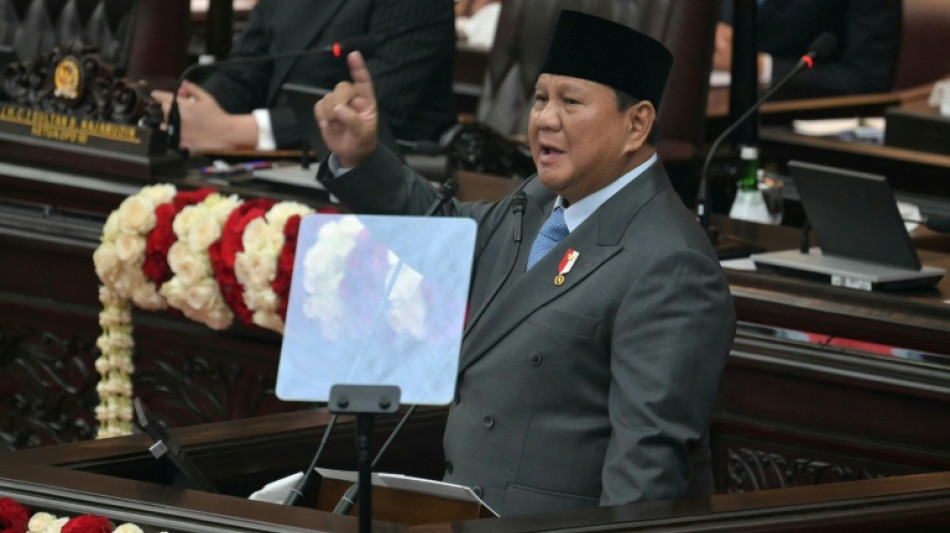
Indonesia's president on Friday floated creating a special court to investigate "unproductive" boards reporting "made up" profits, as he pledged to close 750 state-owned enterprises by year-end.
Southeast Asia's biggest economy has long battled corruption in its public and private sectors, despite strengthening anti-graft laws, creating special investigative commissions and nabbing several high-profile suspects.
In successive state of the nation and budget addresses, President Prabowo Subianto said Friday that Indonesia's vast natural wealth was not sufficiently benefiting its people.
He railed against "far too many unproductive state-owned enterprises (SOEs), always reporting losses while claiming profits".
"Those profits are just made up," he added.
Out of 1,074 SOEs on the books, Prabowo said 290 were already closed, and by December 31, only about 300 should be left operating.
"These state-owned enterprises sometimes operate as they please, with no sense of responsibility to the nation," said the president, who took office in October 2024.
He mooted the creation of "a special ad hoc court to investigate the management and boards" of SOEs -- potentially going back three decades.
But he also asked lawmakers to consider a "special amnesty for those who repent".
- Commodity exchange -
Prabowo said Indonesia should benefit more from its position as one of the world's largest producers of palm oil, nickel, tin, coal and other key global commodities.
In an address to lawmakers, he called on parliament to create a new mineral and commodities exchange that would allow Indonesia to set prices.
The country has several licensed commodity exchanges, but their trading volumes have been largely limited.
"All too often, the price of our wealth, derived from the earth and the sweat of the Indonesian people, is determined abroad, in other countries, on foreign commodity exchanges," Prabowo said.
"Those who don't own these commodities... determine their prices. This doesn't make sense," he added.
"If they (clients) do not want to pay the price we set, then they need not buy."
- 'Improvements and efficiency' -
Prabowo told parliament that efforts to revamp the SOE sector under the Danantara sovereign wealth fund, created last year to manage state assets, have already saved about 50 trillion rupiah (more than $2.8 billion) in overhead costs.
The drive included savings in directors' and commissioners' salaries, building and car rentals, and business travel, he said.
Thanks to "improvements" in how SOEs are managed, profits rose more than 75 percent from 2024 to 326 trillion rupiah last year, the president added.
Indonesia scored a low 34 out of 100 on watchdog Transparency International's Corruption Perceptions Index for 2025.
Graft has been a rallying cry for protesters decrying rising living costs as Indonesia and the region reel from high oil prices caused by the Middle East war.
One frequently criticised initiative is the government's costly free school meals programme, one of Prabowo's signature projects which he vowed Friday to continue "with improvements and efficiency".
The multibillion-dollar meal scheme has been marred by mass poisonings and corruption allegations, including the arrest of the former head of the agency tasked with overseeing it.
Q.al-Buainain--BT