Finland grants licence for world's first nuclear waste repository / Photo: © AFP

Finland's government has granted an operating licence for the world's first permanent repository for radioactive spent nuclear fuel, waste management company Posiva said Thursday, 22 years after construction began on the site.
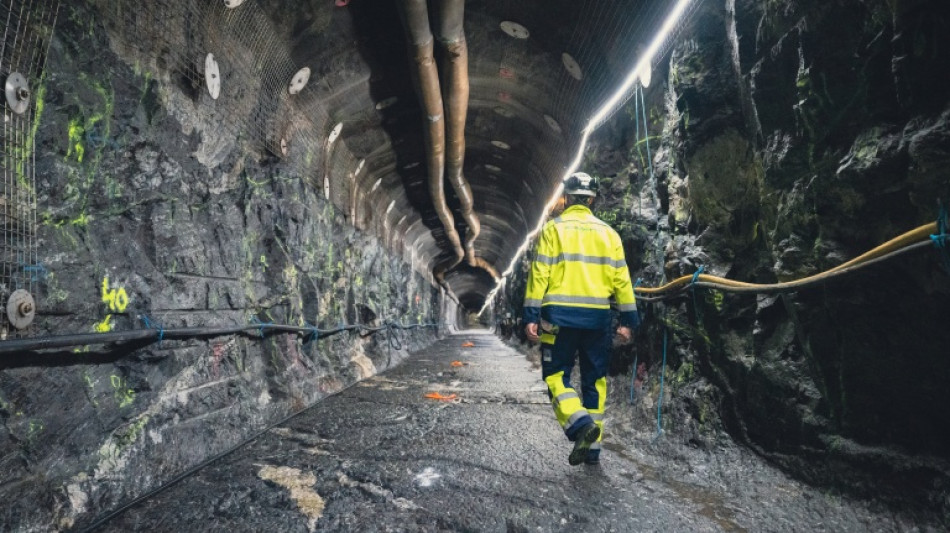
Blasted into 1.9 billion-year-old stable bedrock in Eurajoki in southwestern Finland, the geological repository will house spent nuclear fuel in holes drilled into the bedrock, where it will remain harmfully radioactive for thousands of years.
"This is a great and historic day for both Posiva and Finland," Posiva chief executive Ilkka Poikolainen said in a statement.
The site, dubbed Onkalo which means "cave" in Finnish, is expected to start operations soon, but Posiva said no exact date had been decided yet.
"No detailed schedule is given at this point for the start-up," it said.
"Before final disposal begins, Posiva will finalise the commissioning stage, carrying out the necessary tests and inspections which STUK (the Finnish Radiation and Nuclear Safety Authority) also needs to verify and approve."
With space for 6,500 tonnes of uranium, Onkalo will provide permanent storage for spent fuel from Finland's five nuclear reactors.
The fuel will be encapsulated in copper canisters that are highly resistant to corrosion, then lowered into holes drilled in tunnels in the bedrock, which will be filled with bentonite clay and finally sealed with a steel-reinforced concrete plug.
The fuel will be highly radioactive for tens of thousands of years. After about 100,000 years, the levels will be about the same as the uranium ore of which the fuel is made, according to Posiva.
Countries have been wrestling with what to do with dangerous nuclear by-products since the first plants were built in the 1950s. Currently, most of it is in temporary storage.
Final repositories are being built in other countries, including neighbouring Sweden and in France, but Finland is expected to be first to open its underground storage facility.
The cost of the Onkalo site has been estimated at $1.16 billion.
po/rl
Z.al-Jawder--BT