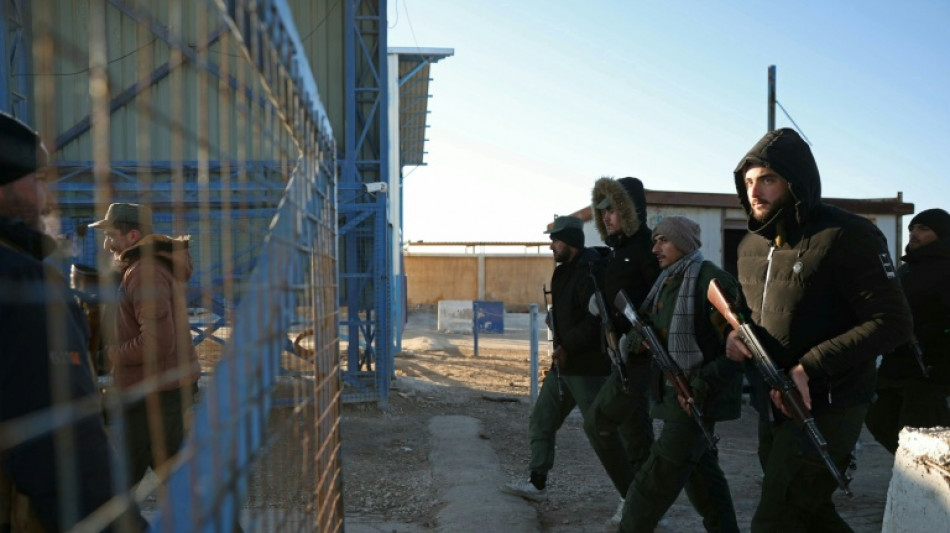
Syria army enters Al-Hol camp holding relatives of jihadists: AFP / Photo: © AFP

Syria's army on Wednesday entered the vast Al-Hol camp that houses relatives of suspected Islamic State jihadists after Kurdish forces withdrew from the site, said an AFP journalist at the scene.
The government announced a new ceasefire with the Kurds on Tuesday after taking swathes of north and east Syria that had long been under the control of Kurdish-led Syrian Democratic Forces (SDF).
The United States, which has long headed an international coalition and backed the Kurds against IS, said the purpose of its alliance with the SDF had largely ended years after they defeated the jihadists.
Now, the United States was backing Syria's new Islamist authorities who are seeking to extend their control across the country after years of civil war.
Thousands of former jihadists, including many Westerners, have been held in seven Kurdish-run prisons in north and east Syria, while tens of thousands of their suspected family members live in the Al-Hol and Al-Roj camps.
At Al-Hol, the AFP correspondent saw soldiers open the camp's metal gate and enter, while others stood guard.
The camp in a desert region of Hasakeh province holds around 24,000 people, including some 6,200 women and children from around 40 nationalities.
The defence ministry said Tuesday it was ready to take responsibility for Al-Hol camp "and all IS prisoners" after Kurdish forces said they had been "compelled to withdraw" from the site to defend cities in Syria's north, before the truce was announced.
- Prisoners' families -
On Sunday, Syrian President Ahmed al-Sharaa and SDF chief Mazloum Abdi had agreed that the Syrian state was to take over responsibility for IS prisoners.
Abdi on Tuesday urged the US-led coalition to "bear its responsibilities in protecting facilities" holding IS members.
Al-Hol is the largest camp for suspected jihadists established by Kurdish forces after they took control of swathes of Syria with coalition backing.
That battle culimated with the jihadists' territorial defeat in Syria in 2019.
Al-Roj is still under Kurdish control in eastern Hasakeh province.
In Raqa province, state media said Tuesday that security forces had deployed around the Al-Aqtan prison.
A security official on the ground told AFP that Kurdish forces were still inside the facility on Wednesday.
An AFP correspondent saw hundreds of people who had come to check on family members held in the jail.
Hilal al-Sheikh, from a village in the province, was seeking information about his 20-year-old son, jailed for 10 months.
"The SDF terrorist gangs arrested my son" in the middle of the night, Sheikh said.
"They said he'd attended a celebration for President Ahmed al-Sharaa and they accused him of terrorism... before sentencing him to five years in prison," he said.
"I've been here near the prison for four days and we want to know what's happened to the prisoners."
On Tuesday, the interior ministry said 120 IS members escaped from the Shadadi prison in Hasakeh province, later saying it had arrested "81 of the fugitives".
- 'Move forward' -
The army had accused the SDF of releasing IS detainees from the facility, while the Kurds said they lost control of the facility after an attack by Damascus.
US President Donald Trump told the New York Post Tuesday he had helped stop a prison break of European jihadists in Syria, referring to the Shadadi incident.
Syria's presidency on Tuesday announced an "understanding" with the Kurds over the fate of Kurdish-majority areas of Hasakeh province, and gave them "four days for consultations to develop a detailed plan" for the area's integration.
If finalised, government forces "will not enter the city centres of Hasakeh and Qamishli... and Kurdish villages", it added.
The SDF said it was committed to the fresh truce, which ends on Saturday evening and was ready to "move forward with implementing" Sunday's agreement between Abdi and Sharaa.
Under Tuesday's agreement, Abdi would nominate candidates for the posts of Hasakeh governor and deputy defence minister, as well as lawmakers for the transitional parliament.
The announcement came as US envoy to Syria Tom Barrack said "the original purpose" of Kurdish forces as the primary anti-IS force had "largely expired".
Trump told a press conference on Tuesday that "I like the Kurds, but... the Kurds were paid tremendous amounts of money, were given oil and other things, so they were doing it for themselves more so than they were doing it for us".
"We got along with the Kurds and we are trying to protect the Kurds," he added.
strs-lk/lg
S.al-Jaber--BT