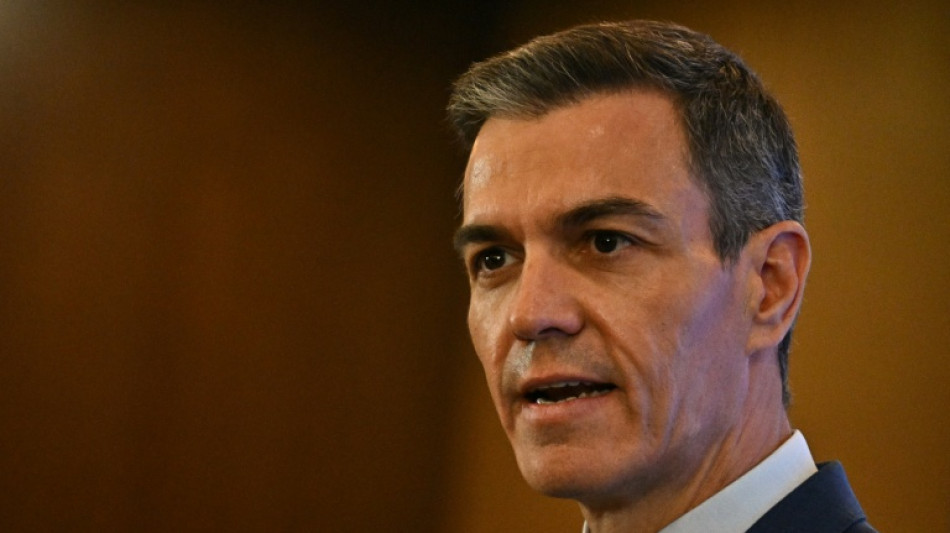
Trump turmoil sees Spain's Sanchez emerge as progressive star / Photo: © AFP

Spain's Pedro Sanchez hosts a summit of world progressives this week with greater global clout as turbulent relations with US President Donald Trump bolster his image as a left-wing hero.
Clashes with Trump, virulent criticism of Israel and a championing of immigration have set the Socialist prime minister apart in Europe, which has in the last years tilted to the right.
The latest episode was his staunch opposition to the US-Israeli war on Iran, with Trump threatening trade retaliation after Spain denied the use of its bases.
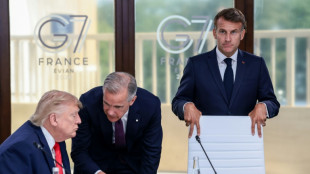
Sanchez broke with NATO allies last year by refusing to agree to Trump's demand that alliance members hike defence spending to five percent of GDP.
He is also the highest-profile Western leader to call Israel's devastating two-year war against Hamas in Gaza a "genocide".
For Ignacio Molina, a senior fellow at Madrid's Elcano Royal Institute, Sanchez has earned Spain recognition for a "coherent" stance in the Global South, particularly in the Arab world and Latin America.
"It works out well for the government, because it has gained a lot of leadership, influence and presence in many countries," Molina told AFP.
Of the countries adopting a similar stance, Spain is the "most relevant" because others are not in NATO, such as Ireland, or outside the European Union, for example Norway, he added, citing nations who also recognised a Palestinian state in 2024.
"Spain has achieved a weight among the European Union's big countries that it did not have before," agreed Joan Botella, a political science professor at the Autonomous University of Barcelona.
- 'Trump's nemesis' -
Sanchez has gained attention in international media, penning articles for The New York Times and Le Monde diplomatique.
"Pedro Sanchez has become the standard-bearer for Western political opposition to the US president," The Wall Street Journal wrote in March, while the Financial Times called the Socialist "Trump's nemesis in Europe".
Bathing in the new-found limelight, the current president of the Socialist International will host leading leftist figures at the two-day Global Progressive Mobilisation beginning in Barcelona on Friday.
Brazil's Luiz Inacio Lula da Silva, South African President Cyril Ramaphosa and Mexico's Claudia Sheinbaum are due to attend alongside 400 mayors and more than 100 parties.
Sanchez and Lula will deliver the keynote address on Saturday at the gathering, which organisers say aims to rally progressives in times of turmoil marked by the rise of the far right.
Progressives must "unite, tell citizens that we belong to something that goes beyond domestic politics, our borders -- and that is having a positive, humanist outlook," Sanchez said on Tuesday during his fourth visit to China in as many years.
The rise of Sanchez's stock abroad contrasts with his polarising image at home.
He has never commanded a parliamentary majority since taking office in 2018 and is under pressure from corruption investigations into relatives and former close political allies.
- 'Absorb left-wing vote' -
Botella said Sanchez was "playing the foreign policy card hard, because it's an area he's comfortable in, and in which a majority of Spanish public opinion is favourable to him".
More than 68 percent of Spaniards opposed the war on Iran, including voters of the conservative main opposition Popular Party (PP), according to a March poll published in El Pais newspaper.
"Spaniards have a certain inferiority complex when they go out into the wider world. In that sense, the profile that Sanchez's figure has acquired satisfies many people beyond his electoral base," Botella told AFP.
On the other hand, the PP says he has used foreign policy exclusively for domestic purposes, to rally fractious left-wing forces and distract attention from the negative headlines.
Other Western leaders have preferred to handle Trump with tact on trade, defence and foreign policy.
Sanchez "is trying to use this image of a progressive leader, opposed to Trump" to "strengthen his political position" and "absorb the left-wing vote", said Juan Tovar Ruiz, a professor of international relations at the University of Burgos.
"That has consequences at European level. Right now, I think Spain is in a clearly minority position," he warned.
For Molina, Sanchez's stance risked alienating some traditional allies governed by the right, such as Germany and Italy, but "in the end, what is gained is rather more than what may be lost."
H.al-Zayani--BT