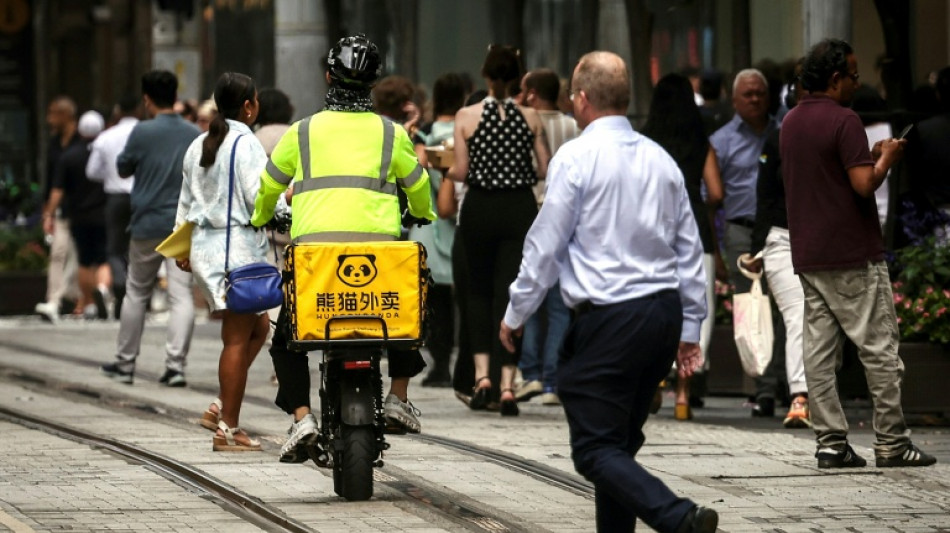
Australian delivery drivers win 'world-leading' pay rise / Photo: © AFP/File
Hundreds of thousands of gig workers in Australia have been granted a huge pay rise from next week under a decision by the country's workplace relations tribunal lauded as "world-leading".
The order from the Fair Work Commission, issued Tuesday, will see delivery drivers working for online platforms such as UberEats and HungryPanda earn Aus$31.30 (US$22) an hour.
Australia's minimum wage currently sits at Aus$26.44 an hour.
The drivers must also be provided with workplace accident insurance under the new rules, which come into effect on August 17.
The country's Transport Workers Union -- which represents gig workers -- hailed the new minimum standards.
"Gig workers in Australia were left outside of our workplace systems for far too long," union National Secretary Michael Kaine said.
"From Monday, they will be entitled to an absolute world-leading set of standards that we will build on over time," he added.
The union jointly applied for the new standard along with delivery apps DoorDash and UberEats.
And Employment Minister Amanda Rishworth described them as "a milestone in delivering stronger protections and a fairer safety net for gig economy workers".
The World Bank estimated in 2023 there were up to 435 million online gig workers around the globe who had largely fallen outside regular labour protections.
In June, the International Labour Organization adopted a convention aimed at extending job protections to gig workers.
Companies behind the apps control the gig work via algorithms that assign tasks, set pay, evaluate performance and even fire workers.
Despite largely controlling the tasks and pay, the platforms typically classify the workers as independent contractors rather than employees.
This allows them in many cases to ignore things like minimum wage requirements, workplace safety and access to social security.
I.al-Mahmood--BT