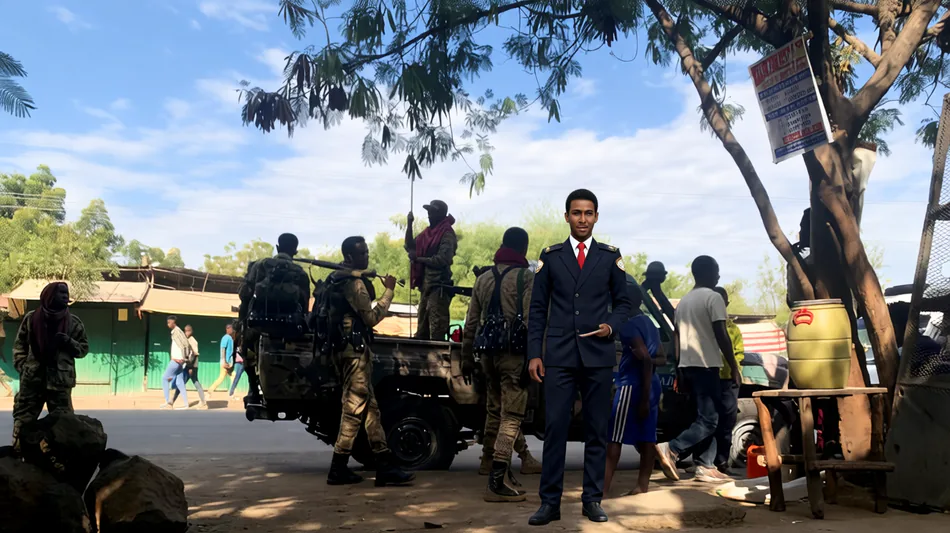
Amnesty Calls for War Crimes Probe Into Ethiopian Shelling of Tigray
Amnesty International has called for an investigation into possible war crimes following artillery strikes by Ethiopian government forces and allied militias on densely populated areas in northern Ethiopia’s Tigray region. The human rights organization also accused the rebel Tigray People’s Liberation Front (TPLF) of endangering civilians during recent fighting in the town of Alamata.
Amnesty International said on Tuesday that artillery strikes by Ethiopian forces and a pro-government militia on densely populated urban areas in the northern Tigray region this year should be investigated as possible war crimes.
The human rights group also accused the rebel Tigray People’s Liberation Front (TPLF) of endangering civilians during the September battle for the town of Alamata by placing fighters in residential areas and using local schools for military purposes.
The eruption of fighting on September 23 between pro-government forces and the TPLF rekindled a 2020-2022 civil war, in which the US accused all sides of committing war crimes. The warring parties all denied allegations of widespread abuses.
Spokespeople for the Ethiopian government, the Ethiopian National Defence Force (ENDF) and the TPLF did not respond to Reuters requests for comment on the Amnesty report.
Amnesty said the TPLF provided a written response saying the allegations against the group were unfounded.
A spokesperson for the Tigray Peace Force (TPF), a pro-government militia that Amnesty said was involved in shelling Alamata, told Reuters that the group’s fighters were not on the front lines during the battle.
Amnesty, which based its report on interviews with survivors and witnesses and on videos, satellite imagery and other open-source material, said the ENDF and TPF shelled residential areas of Alamata, in southern Tigray, while advancing on the town.
“For three consecutive days, the ENDF and TPF repeatedly shelled Alamata in total disregard of the lives of its 80,000 inhabitants,” Yasmine Ahmed, Amnesty’s senior director for regional human rights impact, said.
The ENDF and TPF seized Alamata on September 28 and captured Tigray’s capital Mekelle less than a week later.
Federal forces now control major cities across Tigray but continue to face resistance from TPLF fighters. Ethiopia and neighbouring Eritrea, which lies north of Tigray, have also been amassing forces along their shared border in recent days, according to conflict monitors and people tied to Tigrayan militias, fuelling fears of outright war between the historical rivals.
Ethiopia and Eritrea have not directly commented on the troop build-up.
The 2020-2022 civil war in Tigray was one of this century’s deadliest, killing around 600,000 people, according to the African Union. No comprehensive estimates exist for the current conflict’s human toll.
In Alamata, Amnesty said it had independently verified the deaths of 14 civilians and many more injuries in four shelling incidents.
One of the deadliest struck five houses in the Kebele 04 residential area on September 27, killing seven people, including a mother, her young son and her brother.
Amnesty said the strikes hit homes about 150m from the Werknesh Hotel. Some residents said the hotel had housed TPLF fighters, though Amnesty said it could not verify whether they were there at the time of the attack.
Amnesty said the presence of TPLF fighters nearby could not justify the indiscriminate use of explosive weapons in a densely populated area.
U.al-Sulaiti--BT