'They looked like me': Why Arsenal became Africa's club / Photo: © AFP
In Kenyan influencer Nana Owiti's wardrobe, dozens of Arsenal jerseys tell the story of her passion for the club.
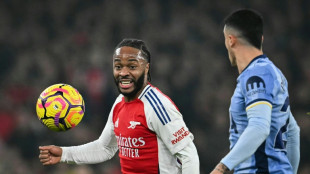
It's an unbreakable bond that goes back 20 years to the days when the London team's largely black squad made them hugely popular in Africa.
"(Thierry) Henry actually made me fall in love with Arsenal first off because he was a cutie," said Owiti, who has millions of social media followers for her Gunners-obsessed social media feeds.
Her first and most treasured jersey was Henry's number 14.
"And then I look again and I see Sol Campbell -- his massive body," she added with a giggle. "And all of a sudden, Kolo Toure... so many players of African descent."
In September 2002, Arsenal became the first club to name nine black players in a Premier League starting XI as they beat Leeds 4-1.
"(They) looked like me... that was why I chose Arsenal," said Owiti.
"Arsenal is responsible for most of my happiness and sadness."
It's mostly happiness these days, with the club on the verge of winning the Premier League and securing a place in the Champions League final this week.
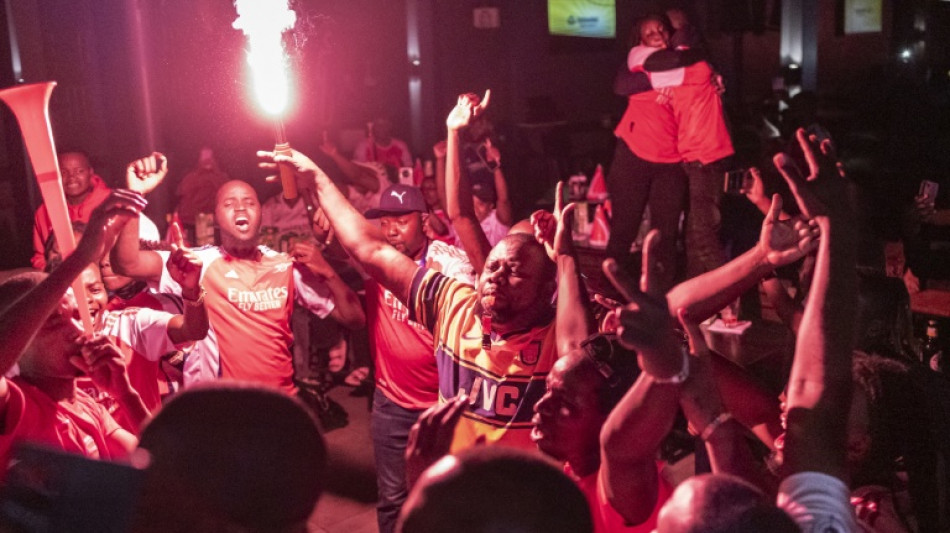
There were ecstatic scenes at a bar in Nairobi on Wednesday when Arsenal beat Atletico Madrid 1-0 to reach the Champions League final for only the second time.
Dozens of gleeful Kenyans blasted vuvuzelas when tearful Spanish fans appeared on screen, and one fan even lit a flare inside the bar, adding a Gunner-red hue to the jubilation.
Zimbabwean Leslie, who only gave his first name, shared a similar story to Owiti.
"I was 12 years old. Arsenal sometimes had nine black players out of 11. I could identify with them," he said, reeling off the club's all-time best XI with the likes of Henry, Campbell, Ashley Cole, and Patrick Vieira.
But he was also in awe of the club's long-time manager Arsene Wenger, who was in charge from 1996 to 2018. "He was a revolutionary, a visionary!"
- 'Made them great' -
Wenger was a key factor in Arsenal's appeal, agreed Emeka Cyriacus Onyenuforo, founder and president of the Arsenal supporters club in Nigeria, which grew significantly after local star Nwkankwo Kanu joined the Gunners.
Wenger made it "a unified football club, by not looking at the skin of the player, going beyond that to get... fantastic players that he got from nowhere and made them great," Onyenuforo told AFP.
In Ethiopia, too, there was a feeling that Wenger gave "priority to African players," said Akalework Amde, head of the country's supporters club.
It didn't hurt that Arsenal were racking up victories in that period: three Premier League titles (1998, 2002, 2004) and a 49-match unbeaten run in 2003-2004 that earned their players the nickname "The Invincibles".
It was a time when the Premier League was transforming into an international brand, and beaming into African homes via the South African satellite channel Supersport.
"If you go way back to the 80s, every Kenyan would watch football made in Germany, because that's all that used to appear," said Carol Radull, who runs hugely popular social media feeds devoted to Arsenal.
The subsequent decades of drought, without any major titles, has not dampened the enthusiasm.
Raila Odinga, a dominant political leader in Kenya for decades up to his death last year, was a passionate Arsenal fan.
Rwandan President Paul Kagame, whose country sponsors Arsenal through the "Visit Rwanda" campaign, posts about the club on X.
While Africa initially developed a passion for the Gunners because of their black players, "now people love the team for the team," said Robbie Lyle, founder of Arsenal Fan TV, who has travelled to all five continents to meet the club's supporters.
"The following has been insane," he said. "In Africa, everywhere you go, you see an Arsenal shirt."
F.al-Ghurair--BT