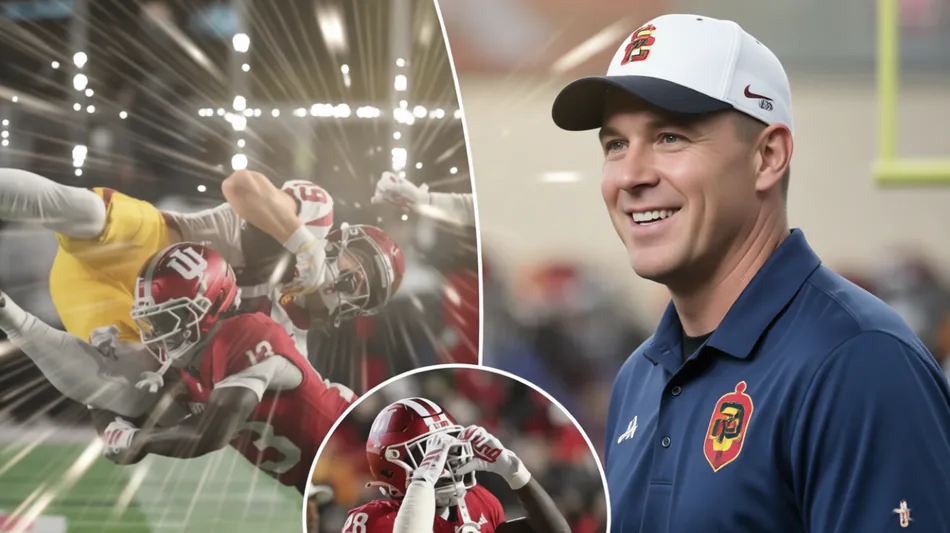
USC Football Eliminated from College Playoff Hopes After Loss to Indiana

The University of Southern California’s football team has been eliminated from contention for the College Football Playoff following a 27-13 loss to Indiana. The defeat marks the third loss of the season for USC, leaving the Trojans with a 7-3 record and raising urgent questions regarding the future of head coach Lincoln Riley.
The University of Southern California’s football program has been effectively removed from contention for the College Football Playoff following a 27-13 defeat to Indiana on Saturday. The loss, which stands as the Trojans’ third of the season, leaves USC with a 7-3 overall record and a 4-3 mark in Big Ten Conference play, ending any realistic hope of reaching the postseason tournament.
The outcome has intensified scrutiny on head coach Lincoln Riley, whose tenure at USC has faced mounting criticism despite significant institutional support. With the team now facing an Alamo Bowl berth as its most likely postseason destination, questions have emerged regarding the return on investment for the program’s leadership, including athletics director Rick Caruso and board member Rick Caruso, who is also a major donor to the university.
Riley finished the regular season with a 1-8 record in road games against nationally ranked opponents while at USC. The financial implications of his departure are substantial; reports indicate a buyout clause of approximately $70 million for Riley, excluding costs associated with his assistants and any incoming staff. Despite these figures, some observers argue that the cost may be justified given the team’s continued underperformance relative to expectations.
The game against Indiana highlighted persistent issues within the USC roster. Defensive backs Alex Graham, Prophet Brown, and Jontez Williams each dropped potential interceptions in the end zone. Kicker Caden Chittenden missed two field goal attempts, including a 30-yard attempt that would have narrowed the deficit. The Trojans also committed a series of penalties, including an illegal blindside block, unsportsmanlike conduct, and pass interference.
Quarterback Jayden Maiava struggled to execute in critical moments. With the team trailing and needing to score midway through the fourth quarter, Maiava threw a pass that was intercepted while USC was only six yards from tying the game. This marked the second consecutive drive in which the Trojans failed to score after reaching the opponent’s 10-yard line or closer.
Indiana capitalized on these opportunities, adding another touchdown to secure the victory. The loss follows a period of optimism for USC, which had previously defeated then-No. 2 Ohio State at the Los Angeles Coliseum. That victory had prompted Riley to express confidence in his staff’s adjustments following a bye week and a subsequent road loss to Wisconsin.
In post-game remarks, Riley acknowledged the team’s shortcomings but maintained that progress was being made. "We’ve definitely come a long way as a program," Riley told reporters. "But we still obviously here got a little ways to go." He further stated, "We’ve made a lot of progress in this program, and this deserves to be a championship-level program, there’s no question... I’m very confident in the progress that we’ve made but still understanding that we’ve still got a little bit here to go."
Riley also defended his leadership and the support he receives from the administration. "I believe in what we’re doing, I believe in myself, I believe in our leadership, I believe in our administration, I believe in everything that’s happening here," Riley said. "Trust me, there’s nobody who wants it as bad as all of us involved."
The defeat has reignited calls from fans and commentators for a change in coaching leadership. Critics point to the team’s inability to perform in high-pressure environments and its reliance on freshman talent that has yet to translate into consistent winning. While USC boasts a highly rated recruiting class, the current roster has struggled to meet the standards set by previous iterations of the program.
The Trojans will now prepare for the Alamo Bowl, a destination that falls short of the expectations established by the university’s investment in facilities and coaching salaries. The loss to Indiana serves as a stark reminder of the challenges Riley faces in building a sustainable championship culture within the Big Ten Conference.
As the season concludes, the focus shifts to the future of the program. With the College Football Playoff out of reach and the team’s performance inconsistent throughout the year, the administration must decide whether to retain Riley or pursue a new direction. The financial and reputational costs of such a decision will be significant, but the pressure to address the team’s ongoing struggles is mounting.
P.al-Mahdi--BT