Cambodia welcomes back dozens of artefacts looted by UK trafficker / Photo: © AFP

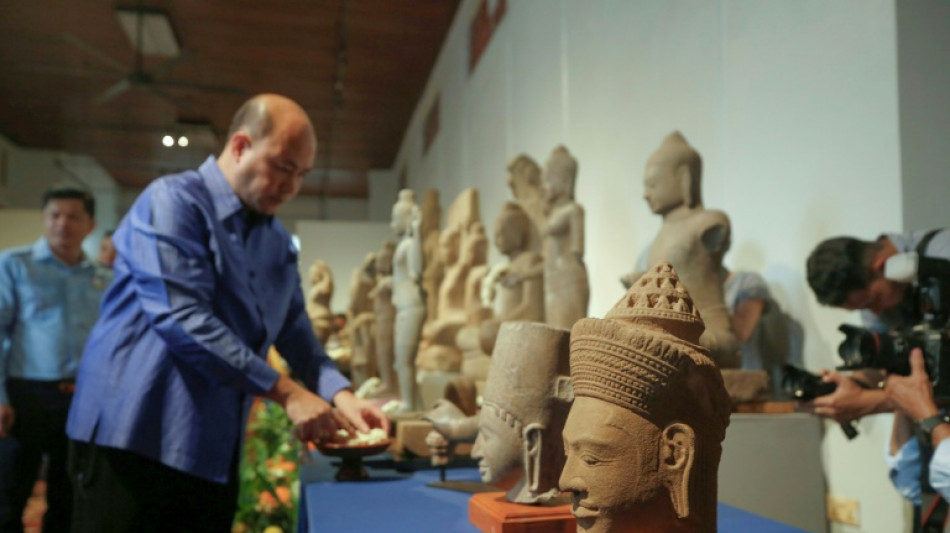
Cambodian monks chanted blessings and scattered flowers Friday over 74 cultural artefacts returned to the country after being plundered by a notorious British antiques smuggler.
Scholar Douglas Latchford -- once regarded as a key authority on Cambodian antiquities -- was charged by prosecutors in New York in 2019 with smuggling looted Cambodian relics to sell on the international black market.
Cambodia's culture ministry said the repatriation from Britain of the relics, some dating back more than around 1,000 years, was sealed in a deal with the estate of Latchford -- who died in Bangkok in 2020.
Before the scandal came to light, Latchford earned acclaim for books detailing the art of the ancient Khmer Empire, which spanned modern-day Cambodia and much else of Southeast Asia.
Deputy Prime Minister Hun Many told reporters the return of the artefacts was a matter of "national pride" because the pieces "connect the national soul from our ancestors' era to the current time".
The objects, to form part of the collection at the National Museum of Cambodia in Phnom Penh, include "monumental sandstone sculptures, refined bronze works, and significant ritual objects", said a culture ministry statement.
"These 74 sacred objects are not merely works of art; they are living witnesses to the genius of the Khmer ancestors and the spiritual heart of Khmer civilization," it added.
In 2024, New York's Metropolitan Museum of Art returned 14 artefacts looted by Latchford, including a 10th century sandstone goddess statue and a large 7th century Buddha head.
Thousands of relics are believed to have been trafficked out of Cambodia over the years.
Experts say the trade thrived from the mid-1960s to the 1990s -- a period of instability that saw the anti-intellectual Khmer Rouge regime rise to power and left precious heritage unprotected.
Since 1996 Cambodian law has forbidden the unauthorised removal of antiquities, with a prison punishment of up to eight years.
Growing numbers of museums and private collections worldwide are facing pressure to repatriate artworks removed from their native countries, particularly those looted during periods of colonial rule.
P.al-Jassim--BT