Chile blaze victims plead for help from razed neighborhoods / Photo: © AFP

Residents of southern Chile, ravaged by four days of deadly wildfires, pleaded for help Tuesday from communities reduced to rubble, as smoke lingered and firefighters braced for the return of hot weather.
The blazes have killed 20 people and razed entire neighborhoods in Chile's Biobio and Nuble regions, consuming an area the size of the US city of Detroit.
Authorities said more than 7,200 people have been affected, and despite official promises of aid, residents told AFP they were getting help mainly from local samaritans.
"I tip my hat especially to people of modest means, because they’re the only ones who came all the way out here. I have yet to see the state step in to help," said Manuel Hormazabal from the town of Punta de Parra, about 30 kilometers (19 miles) from Concepcion, the regional capital of Biobio.
"We're lacking the essentials here, which is electricity and portable toilets," said the 64-year-old gravedigger reduced to sleeping in a tent with his children, grandchildren and two dogs.
All that remains of his home is a bathroom that cannot be used.
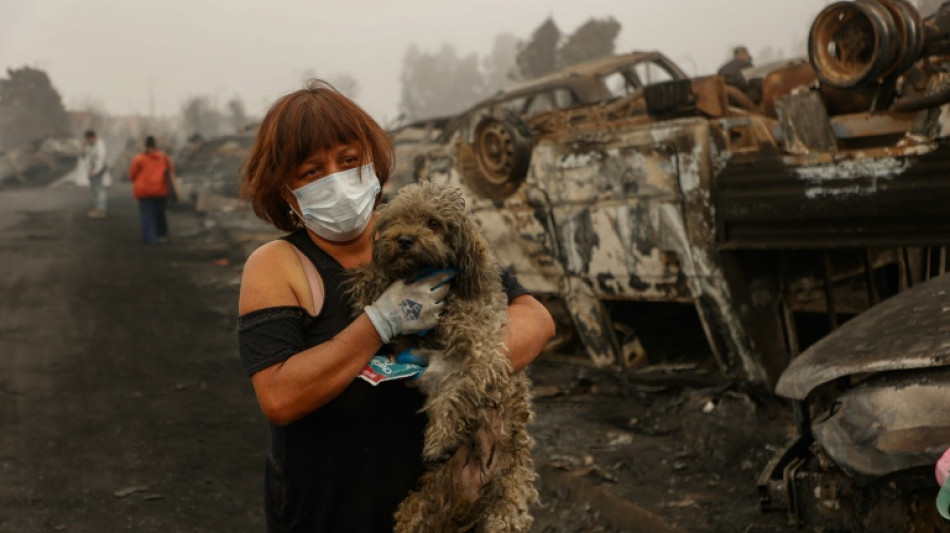
Against hellish backdrops of charred cars and houses reduced to rubble, others shared his frustration.
"It’s only the people helping the people. There’s no one else. It’s only now that some officials are showing up, but the aid is minimal," said Maria Jose Pino, a 23-year-old veterinarian Lirquen, one of Biobio's hardest-hit towns.
Deputy Interior Minister Víctor Ramos told reporters Tuesday "all processes are being accelerated so that aid reaches residents as quickly as possible."
Measures include financial assistance ranging from $350 to $1,500 per family.
- 4,000 firefighters -
Cooler weather offered a respite after three scorching days, and nearly 4,000 firefighters remained mobilized Tuesday to battle 21 fires that were still active in the regions of Nuble, Biobio, and neighboring Araucania.
"The fires are advancing more slowly," firefighter coordinator Juan Quevedo told AFP, thanks to lower temperatures, higher humidity and a shift in wind direction.
But he warned intense heat is forecast to return within days.
Hundreds of homes were destroyed or damaged as the fires ripped through hilltop districts in the coastal town of Penco and adjacent port of Lirquen, leaving a blackened landscape of smoldering ruins.
The fires ripped tin roofs off homes, blew out windows and reduced cars to charred metal carcasses.
Nataly Gonzalez, a 41-year-old living in the center of Penco, said her home escaped damage but relatives living in Lirquen, who "lost absolutely everything," had yet to receive any state help.
She said her relatives were trying to clear rubble and ash from their homes "without helmets and with burnt tools."
Identification of people who died in the blazes has been slow, with only five victims named by Tuesday.
Many bodies were left unrecognizable.
Authorities believe some of the fires were started intentionally, and announced the arrest of one person on suspicion of attempted arson in Penco.
Wildfires have severely impacted south-central Chile in recent years, especially in its warmest and driest summer months of January and February.
This year's blazes are the most severe since February 2024, when several fires broke out near the city of Vina del Mar, northwest of Santiago, resulting in 138 deaths.
A 2024 study led by researchers at the Santiago-based Center for Climate and Resilience Research found climate change had "conditioned the occurrence of extreme fire seasons in south-central Chile" by contributing to a long-term drying and warming trend.
Argentine Patagonia was also struck last week by violent forest fires that ravaged more than 15,000 hectares, according to local authorities.
P.al-Mahdi--BT